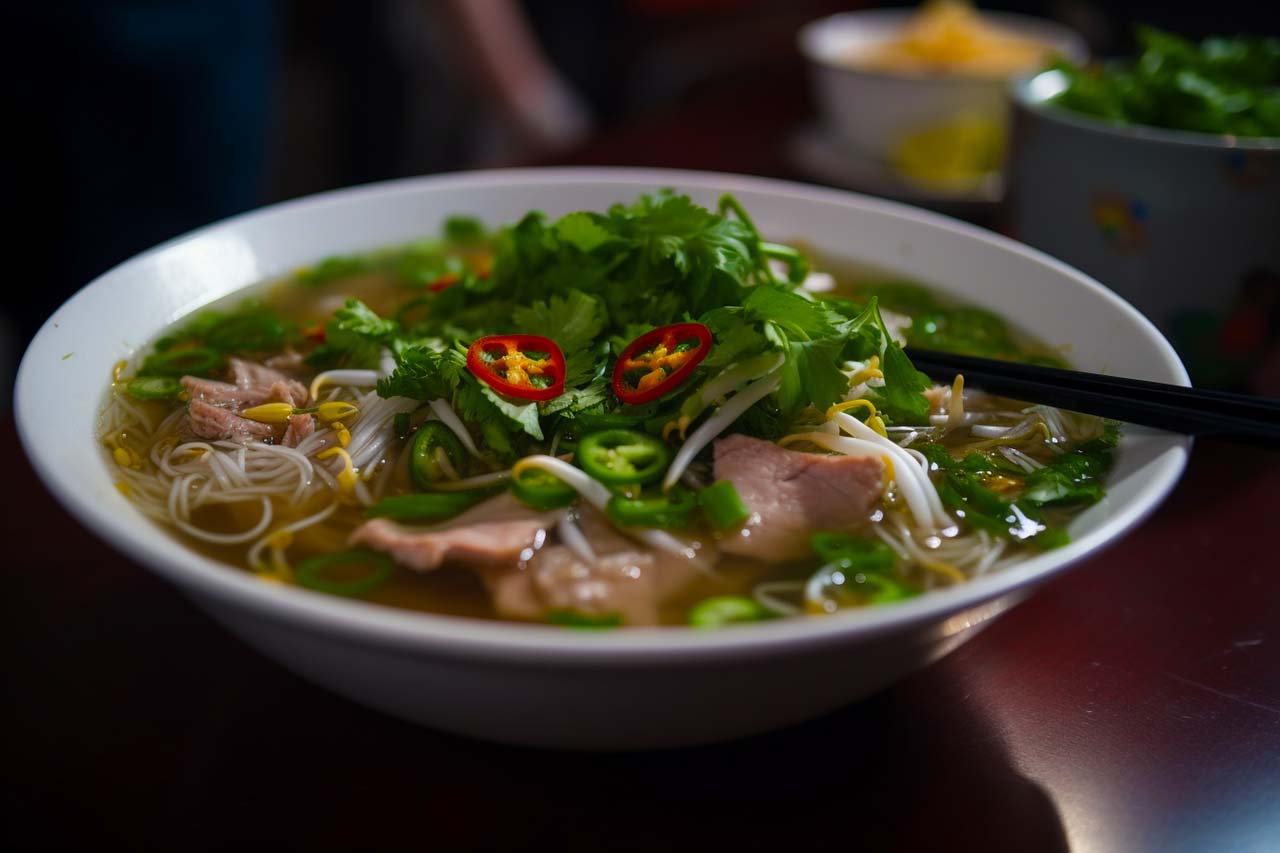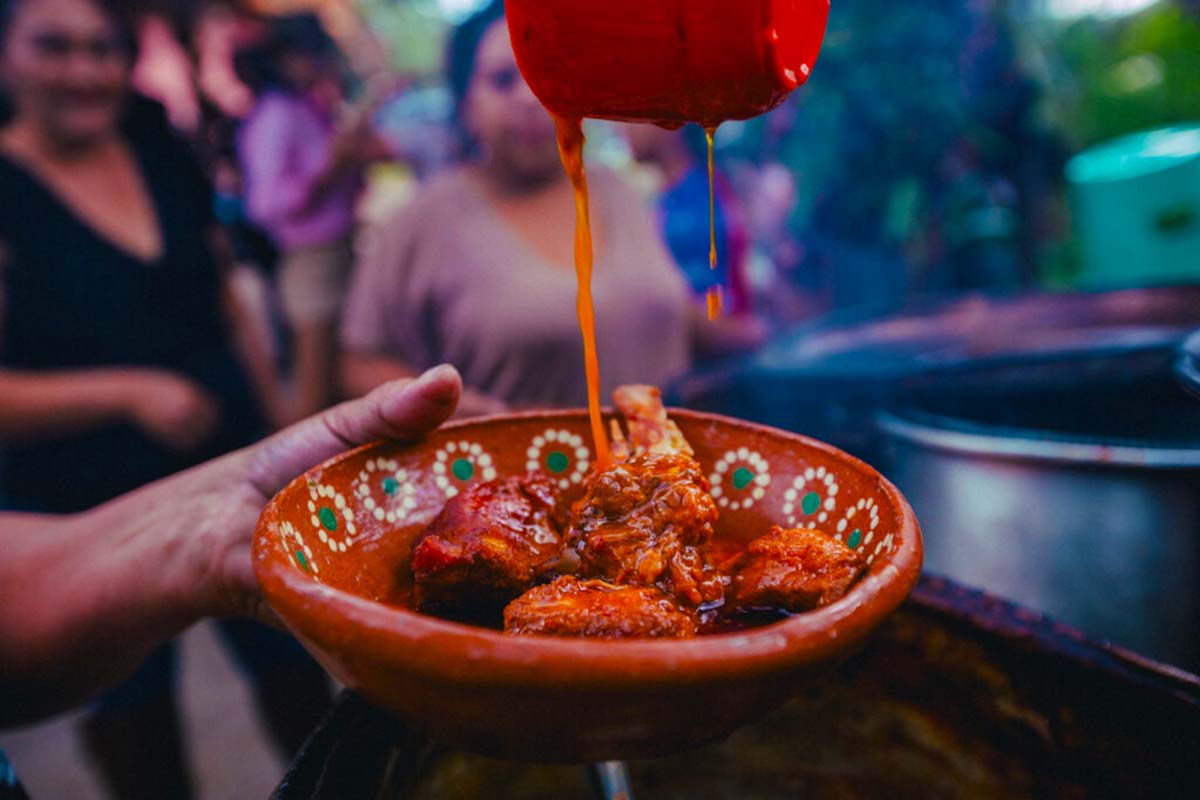


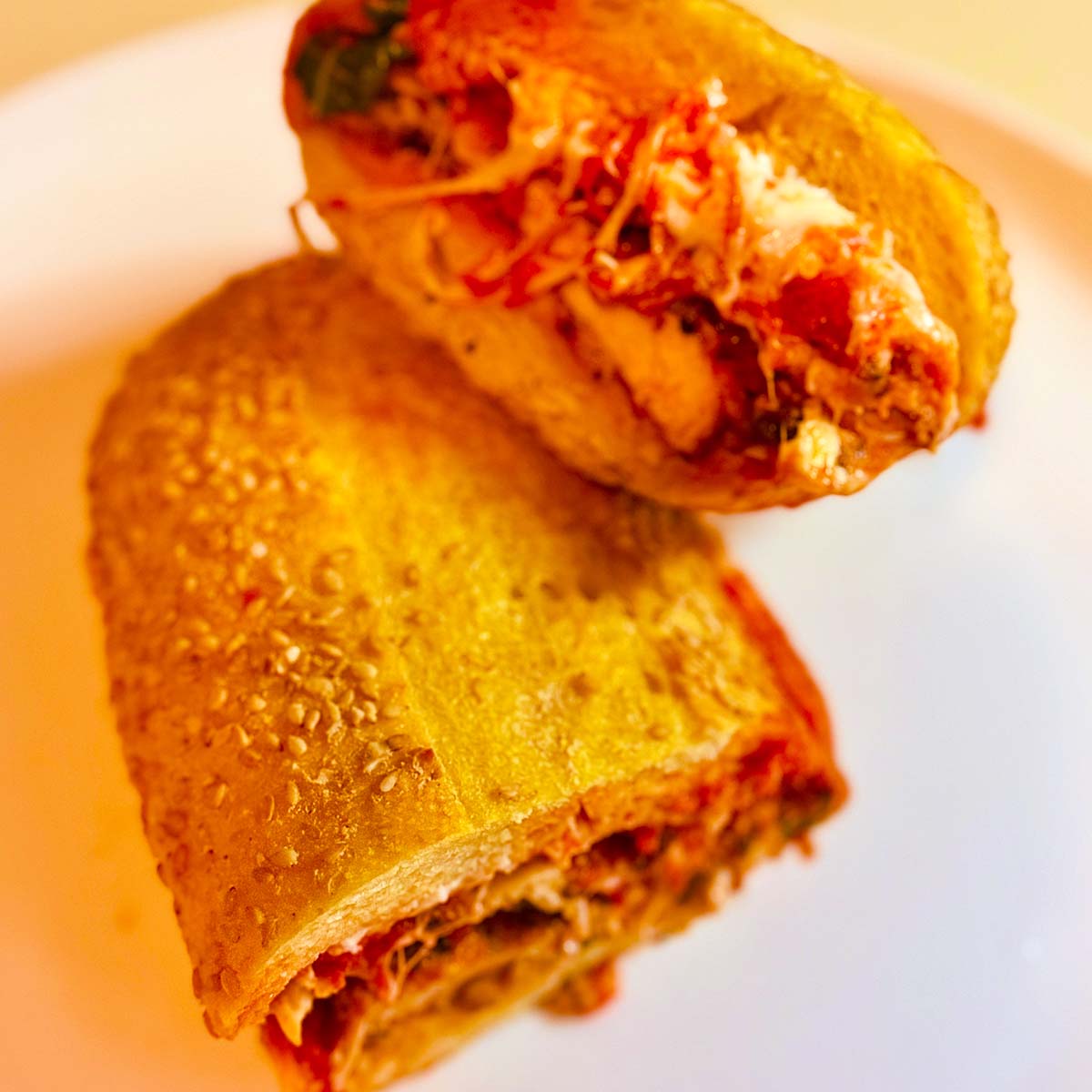
Close your eyes. Breathe in the rising aroma — sweet San Marzano tomatoes, warm garlic, bright fragrant basil. The breaded cutlet whispers of golden oil and crisp breadcrumbs, grounding and celebratory. The bun hums with quiet sweetness, a taste of home.
Take a bite. Bread yields softly, sesame toasted and nutty. Chicken resists, then the tender meat releases its savory juices. Mozzarella stretches, a thread of memory binding sauce, cutlet, bread. Parmesan sparks sharp against creamy mellow. Textures converse — crisp, tender, molten, soft — balanced in harmony.
Flavor unfolds in waves: savory chicken, tangy tomato cutting richness, mellow nutty cheese, bread gathering it all. Each bite a layered chorus, not a single note.
This sandwich is memory made edible — immigrant kitchens, bustling delis, family tables. Resilience fried golden, adaptation melted into cheese, heritage tucked in a hero roll. Eating is participation in comfort, survival, joy.
So linger. Let sauce and cheese warm your sense of belonging. Let crisp cutlets remind you of strength. Let bread bring you home. Here, the chicken Parmigiana sandwich is honored, savored, remembered.
More on where I experienced this soul-hugging, foodgasm later on, first, let’s see how this classic Italian-American culinary staple came to be.
The Story of the Chicken Parmigiana Sandwich
In the crowded kitchens of early Italian immigrants, the scent of frying cutlets mingled with simmering tomato sauce, carrying memories of home into the unfamiliar streets of New York. Eggplant parmigiana, a dish born in Southern Italy, was lovingly recreated with what was available — sometimes veal, sometimes chicken, always layered with cheese and sauce as a gesture of comfort. Over time, the humble chicken cutlet became the star, a practical choice that resonated with American appetites and budgets. What began as a family meal, shared around small tables in immigrant neighborhoods, was slowly transformed into a dish that would define Italian-American cuisine.
ADVERTISEMENT




By the mid-20th century, Italian-American cooking had flourished beyond immigrant kitchens. In bustling neighborhoods of New York and New Jersey, “red sauce” restaurants and corner pizzerias became gathering places where families and workers alike sought comfort in familiar flavors. Chicken Parmigiana, with its golden breaded cutlets bathed in tomato sauce and crowned with melted mozzarella, quickly rose to prominence as a menu favorite.
But America was a nation on the move. Diners wanted food that could be carried out of the restaurant, eaten on lunch breaks, or shared at ballgames. The solution was simple yet transformative: tuck the beloved dish into a crusty hero roll. Suddenly, the indulgent layers of chicken, sauce, and cheese became portable, a handheld feast that married Italian tradition with American convenience. The sandwich spread rapidly, carried by delis, diners, and pizzerias that recognized its appeal. It was hearty enough to satisfy a laborer’s hunger, yet familiar enough to evoke nostalgia for Sunday dinners. Each bite offered a balance of textures — the crunch of breaded chicken, the tang of tomato, the molten stretch of cheese — all wrapped in the warmth of fresh bread.
What began in immigrant kitchens and found its stride in neighborhood restaurants has now become a cultural icon. The “chicken Parm” sandwich is no longer confined to the delis and pizzerias of New York and New Jersey; it has spread across the United States, appearing on diner menus, sports bar specials, and even in gourmet reinterpretations. Its appeal lies in its dual identity: at once nostalgic and innovative. For many, biting into a chicken Parmigiana sandwich recalls family dinners, bustling corner eateries, and the warmth of tradition. For others, it represents the creativity of chefs who continue to experiment — swapping rolls for artisanal ciabatta, layering in prosciutto or arugula, or serving miniature slider versions at catered events.
Beyond its ingredients, the sandwich carries symbolic weight. It embodies the immigrant journey — the blending of heritage and adaptation, the transformation of a sit-down ritual into a handheld comfort. It speaks to America’s love for hearty, flavorful food that can be shared in everyday moments, from lunch breaks to late-night cravings. Today, the chicken Parmigiana sandwich stands as more than a meal. It is a story of resilience and reinvention, a dish that honors its Italian roots while thriving in the rhythm of American life. In every bite, it offers not just sustenance, but a reminder of how food can carry history, identity, and comfort across generations.
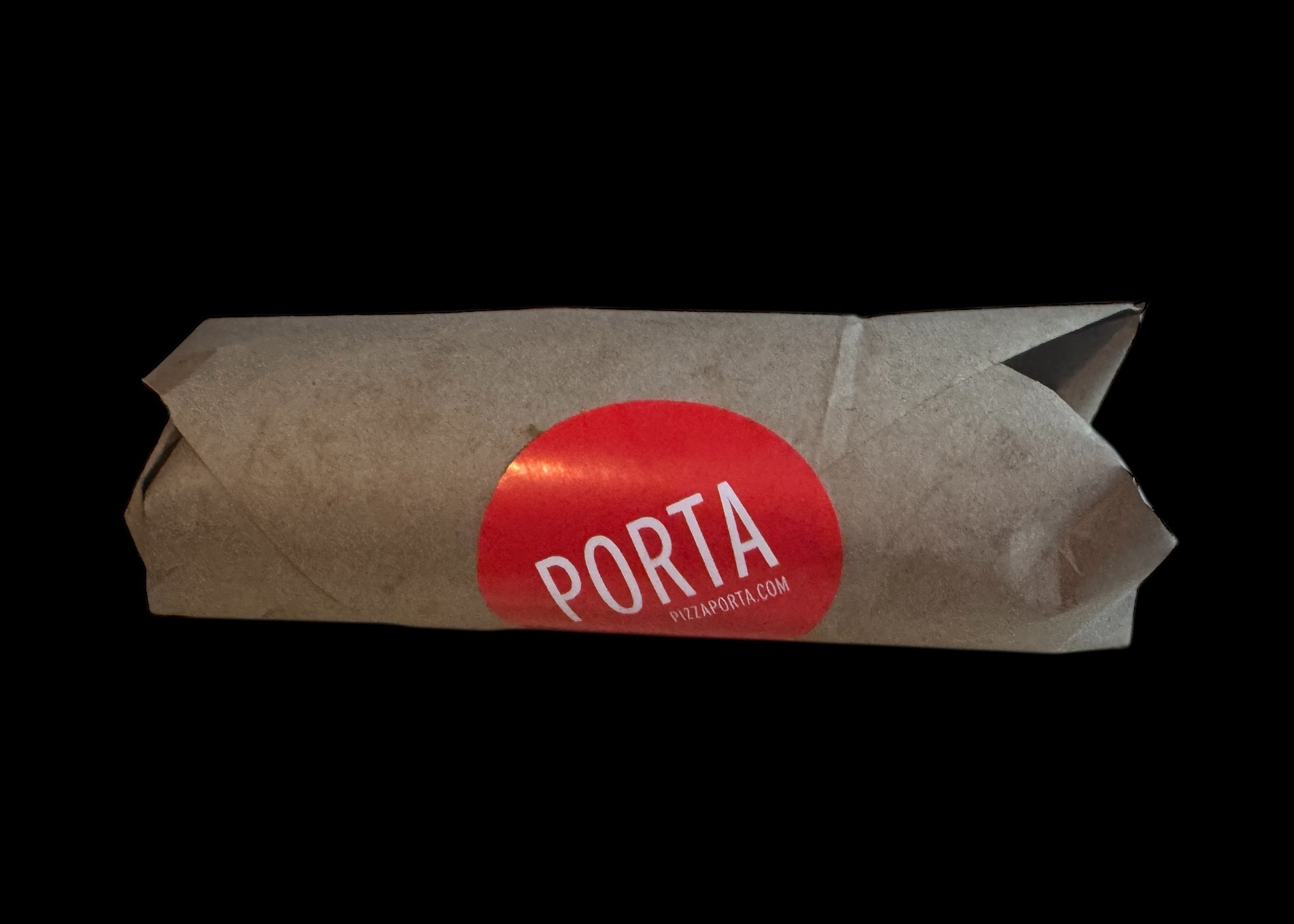
The chicken parmigiana sandwich is more than bread, sauce, and cheese—it is a story of resilience, of heritage carried across oceans and reshaped in new lands. Porta, with its long tables and wood-fired warmth, becomes the living echo of that story: a place where food dissolves boundaries, where strangers lean closer, where laughter rises above division. Porta is where I experienced, what in my opinion-both culinarily and personally, to be the best chicken Parm in town!
In a time when the political climate often fractures us, both the sandwich and Porta remind us of another possibility: unity through ritual, comfort through community. The crunch of cutlet against bread, the tang of tomato brightening the richness of mozzarella, the hum of voices weaving together in shared space—these are not just flavors or sounds, they are gestures of belonging. They are proof that joy can be communal, that nourishment can be both physical and spiritual.
To bite into a chicken parm at Porta is to taste history and hope at once. It is to remember that immigrant kitchens built bridges, that recipes became languages of survival and celebration, and that even now, in moments of discord, we can gather around a table and find solace in something simple, abundant, and shared.
Here, food becomes a quiet act of resistance against isolation. It becomes a meditation on unity, a reminder that comfort is not passive—it is chosen, created, and offered. And in the warmth of Porta, with sauce on bread and voices rising together, we glimpse the truth: that belonging is still possible, that joy is still within reach, and that even in turbulent times, we can taste the promise of togetherness.
Related Posts
The Many Mexicos of Asbury Park
Mexican culture — including its food — is defined not just by flavor, but by…