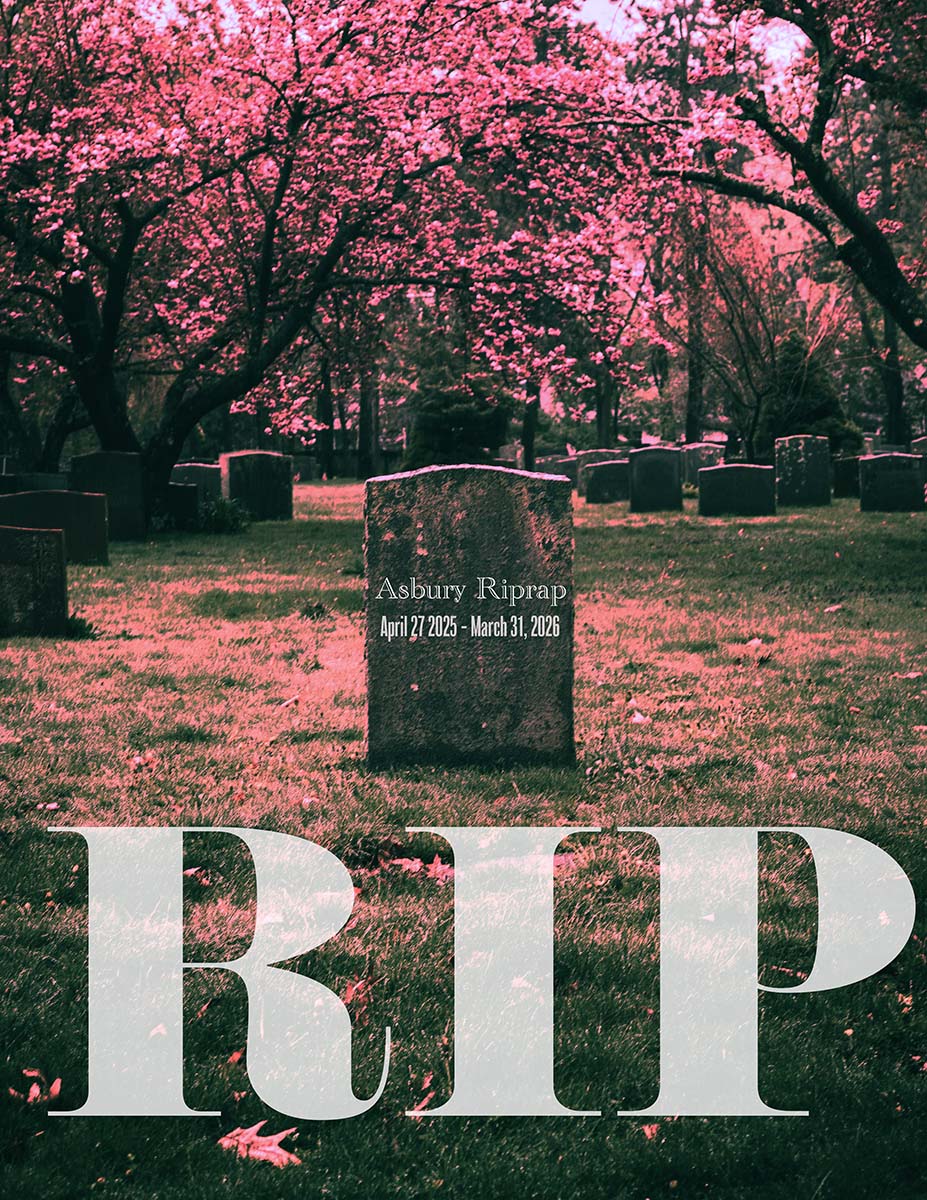
From rezoning to redevelopment, Asbury Park keeps finding ways to allow fewer homes than the plans permit — and the results are rising taxes, shrinking affordability, and the loss of local character.


What do our growing tax bills, the end of Yappy Hour, and the lack of affordable housing have in common? All three stem from a pattern of local legislative actions that have effectively downzoned — or limited housing development — in Asbury Park. Downzoning means shrinking the amount of housing that zoning laws or redevelopment approvals allow, whether by eliminating multifamily districts, approving fewer units than the plan permits, or capping building heights below what the market can support.

The current administration touts its dedication to affordable housing and year-round vitality, but the results tell a different story: fewer homes, higher prices, and fewer unique activities that keep Asbury “weird.”

The math isn’t mathing in Asbury Park.

And it’s not just theory — there was literal downzoning, and we have the receipts.


There was Literal Downzoning

In 2020, the City eliminated R2 and R3 zones that once allowed two- to four-family homes, converting them to single-family districts. On paper, that might look like a tidy way to “protect neighborhood character.” In practice, it ignored the reality that many of these neighborhoods only appear single-family. Large older houses had long since been divided into smaller apartments, second units sat above garages, and informal ADUs provided affordable housing options. The rezoning was a decision based on form, not data — a style preference that wrote multifamily living out of the code.

CLICK TO ENLARGE

The effect of this legislative zoning change by the City Council has been to push many existing multifamily homes into nonconforming status. New owners who can’t prove that units were legally separated in the past are often required to return the property to a single-family use. That shrinks the rental supply, reduces the number of year-round residents, and accelerates demographic change. The numbers tell the story: Asbury Park’s population has fallen even as incomes rise and housing units remain flat, signaling displacement and gentrification as wealthier, whiter, and more part-time households replace the city’s diverse mix of residents and housing types.

CLICK TO ENLARGE
CLICK TO ENLARGE
CLICK TO ENLARGE

The City points to its Accessory Dwelling Unit (ADU) ordinance as evidence that it supports affordability and gentle density. But the ordinance, now a year old, hasn’t sparked a groundswell of new construction. That’s no surprise: the rules are expensive and restrictive, allowing at most three units where four once fit, banning flat roofs and attached units, and requiring parking for all units. Meanwhile, large-scale developers routinely receive reduced parking requirements, looser design controls, and density bonuses. For small homeowners, the barriers are high; for big projects, the doors are wide open.

The math isn’t mathing.

And if you think that’s an exaggeration — we’ve got receipts.


Sunset Square

Under the Waterfront Redevelopment Plan, the Sunset Square site could have supported more than a hundred apartments in a mid-rise building. Instead, the City Council approved just 28 townhomes, half of them facing an alley beside Kim Marie’s — one of the few (relatively) affordable restaurants in northeast Asbury, now dealing with noise and nuisance complaints from its new neighbors. The result is wasted housing potential and poor urban design in a location directly across from Atlantic & Bradley Squares and steps from the Boardwalk.

At the time it was approved, Councilwoman Clayton justified the project based on concerns over height and shadows on the park. But Sunset Square sits on the north side of the park, meaning shadows fall away from it, not onto it. Furthermore, taller neighbors already exist without incident (see: the Berkeley), and Sunset Square is the shortest new development on the park in many years. What the City really approved was a project designed from a national builder’s catalog, with generic “Bowery” and “Chelsea” townhome floor plans identical to units built elsewhere.

Sunset Square

Approving 28 townhomes instead of 100 apartments didn’t just change the look of a block — it eliminated more than 70 chances for someone to live in Asbury Park. On one of the city’s most prominent public spaces, surrounded by landmark buildings like the Berkeley, Convention Hall, and the Asbury Hotel, Asbury Park got a row of exclusive townhomes that do not activate or engage their surroundings. And how long until the 14 townhomes facing Sunset Park start complaining about NJ Pride, Sea.Hear.Now, and many other events held in Bradley and Atlantic Squares?

The math isn’t mathing.

And if context was really the issue, you’d expect consistency. But just across the park, at the Lido, context went out the window, and we have the receipts

ADVERTISEMENT

The Lido / Wonder Bar

Directly across from Sunset Square, the Lido rises eight stories over the Wonder Bar — a height fairly typical within the Waterfront Redevelopment Area. What’s not typical is how the number of units was negotiated down without changing the height or design of the building. Originally approved for about 155 apartments, the project was later reduced to roughly 112 units — a one-third cut. The result: fewer, larger, more expensive condos in the same box, including a penthouse that sold for more than $7 million.

At the time it was approved, the developer testified that the reduction responded to “market forces” that would result in more family-friendly housing. But it really means fewer households, higher average prices, and fewer year-round residents. Meanwhile, the building casts long shadows into Sunset Park and wraps awkwardly around the Wonder Bar. The contrast could not be sharper: a one-story local landmark boxed in by a wall of luxury condos and the ending of the beloved tradition of Yappy Hour.

Preservation is good, but preservation without sensitivity is tokenism. A thoughtful transition in height, paired with a public amenity — a dog park, or even space to continue Yappy Hour — could have respected context while adding community value. Instead, one of Asbury’s quirkiest and most beloved traditions was displaced in exchange for ultra-luxury housing. Cutting 155 units down to 112 didn’t reduce the building’s impact — it only reduced opportunity. That’s 43 fewer households who might have called Asbury Park home. And how many more local traditions have to disappear before someone admits this isn’t progress?

The math isn’t mathing.

And if you think this pattern is confined to the waterfront, check the receipts on Main Street.


Main Street & Transit-Oriented Development

If any place in Asbury Park should be primed for housing, it’s Main Street. The corridor has transit access, walkable shops, and a mix of legacy and new businesses that could easily support more residents. Yet in large parts of the Main Street Redevelopment Plan, heights are capped at just four stories — hardly enough density to spark major reinvestment (see previous Planning Matters article on Main Street). Redevelopment has been sluggish, a clear sign that the zoning doesn’t pencil out for most projects.

The missed opportunities are glaring. The City is planning to use the land directly at the transit center — the single best site in town for new apartments — for a parking deck instead. Housing there could have meant hundreds of year-round residents supporting local businesses and riding the train, but instead the city is treating it like dead space.

Instead of revisiting the zoning to make Main Street a predictable, market-ready place for growth, leadership has doubled down on one-off redevelopment deals elsewhere — 1201 Memorial, Holy Spirit Church, 1101 First Avenue. Those site-by-site negotiations may deliver something eventually, but they reinforce a pattern: rather than setting rules that encourage housing across the city, leadership restricts it in most places and chases bespoke projects in a few. And the irony is hard to miss: these dense redevelopment projects are being shoehorned into single-family neighborhoods — the very areas the 2020 downzoning was supposed to “protect.”

If Main Street really is the heart of Asbury Park, why is its zoning keeping it on life support?

The math isn’t mathing.


From the elimination of multifamily zones, to the neutering of Sunset Square, to the unit cuts at the Lido, to the under-zoning of Main Street, the pattern is consistent: Asbury Park keeps finding ways to allow less housing than the plans already permit. Each decision is justified in the moment — shadows, context, family housing, neighborhood character — but side by side they add up to a city that talks about affordability while legislating against it.

And here’s the hidden cost: fewer year-round residents don’t just mean fewer homes. They mean fewer customers for local businesses, less economic activity on our streets, and less sales tax revenue flowing back into city coffers. With fewer people helping to shoulder the load, property taxes climb higher for those who remain.

The results are visible everywhere: taxes that keep rising as the resident base shrinks, cultural staples like Yappy Hour pushed aside, and housing prices spiraling out of reach. These aren’t accidents. They are the outcome of policy choices that restrict opportunity in the name of “protecting” context, even as the very same policies undermine both affordability and character.

If the city wants affordability, year-round vitality, and cultural vibrancy, it can’t get there by downzoning. It has to let housing be built where it belongs — near transit, along corridors, and on prominent public spaces — instead of cutting opportunities and chasing contradictions.

Because at the end of the day…the math isn’t mathing.

Privacy Preference Center