


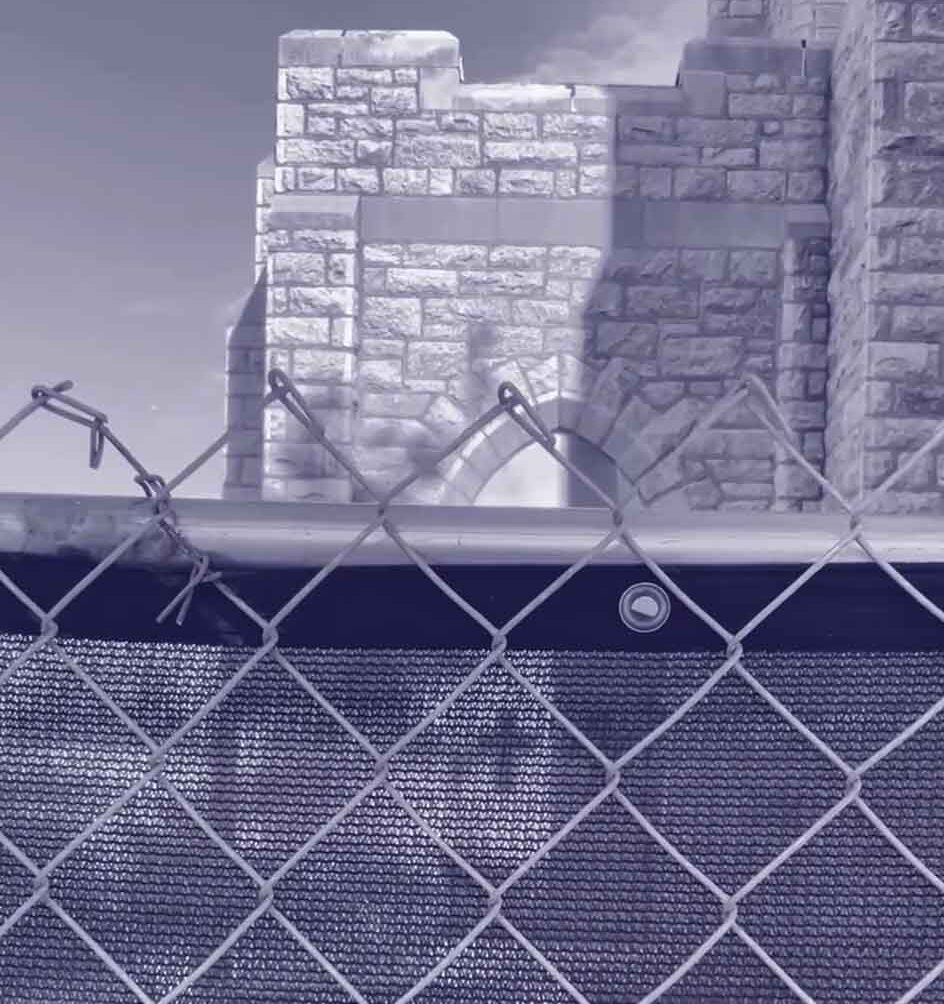
For more than a century, Holy Spirit Church stood as a cultural and architectural landmark in Asbury Park. But the long, complicated path toward its redevelopment tells a very different story – one that reflects a failure of vision and strategic planning. This timeline lays bare how a combination of downzoning, absent preservation policies, and piecemeal decision-making by the Redevelopment Authority (aka The City Council) created the conditions that allowed the building’s demolition to become a real – and legal – possibility. At each stage, opportunities were missed to align redevelopment with the city’s stated goals of affordability, inclusion, and thoughtful growth.
Holy Spirit Church Redevelopment: A Timeline
2020
APRIL
As part of a broader city-wide zoning map update the City of Asbury Park adopted Ordinance 2020-16, which rezoned the Holy Spirit Church property from R2 (two- to four-family residential) to R1 (single-family residential). Though the ordinance claimed to align zoning with the 2017 Master Plan and 2019 Housing Element, the decision to downzone this particular parcel had significant long-term consequences.
Holy Spirit Church sits at a critical location – close to Main Street and within walking distance of transit, services, and jobs. Rather than enabling a transition from the higher-density Main Street corridor to the mixed-density neighborhood to the east, the new R1 designation mandates the lowest-density residential is all that would be permitted. This move sharply reduced the site’s development potential at a time when the City had committed – at least in principle- to expanding affordable housing and encouraging inclusionary development. It also laid the groundwork for the developer’s later proposal for six single-family homes rather than preservation and adaptive reuse of the church.
2021
JUNE
The Diocese of Trenton sold the former Holy Spirit Church property to JLD Investment Group (Mountain View Developments) for approximately $1.7 million. The transaction marked the end of more than a century of religious and cultural presence at the site.
Holy Spirit Church was constructed in 1880, with later additions reflecting early 20th-century ecclesiastical architecture. The building featured Gothic Revival design elements – including pointed arch windows, a bell tower, and detailed masonry – that made it a local landmark and a defining piece of the neighborhood’s architectural fabric. Beyond its design, the church held deep historic and cultural significance for generations of local residents, serving as a spiritual, educational, and social anchor.
Despite the church’s closure and deconsecration, many in the community viewed the building as worthy of preservation or adaptive reuse. Its sale to a private developer raised early questions about how – or whether – the structure would be retained and how future development would respect the site’s legacy.
ADVERTISEMENT





2023
EARLY
The developer submitted a proposal to the City Council to preserve and adaptively reuse the Holy Spirit Church as part of a multi-family housing project. The plan included converting the historic structure into community or cultural use and adding new construction – likely condos or apartments – commercial space, a public plaza, and parking on the surrounding land.
No official unit count was confirmed publicly, but early versions of the proposal reportedly emphasized multi-family density that would be appropriate for the site’s proximity to Main Street. To realize this vision, the developer requested that the City adopt a Redevelopment Plan – similar to those used for 1201 Memorial Drive and 1101 First Avenue – which would allow for greater flexibility in land use, building form, and density than the existing R1 zoning permitted. However, the City Council rejected the request, choosing to leave the single-family zoning in place.
2023
LATE
After the City Council’s rejection of a Redevelopment Plan, the developer pivoted to an approach that took full advantage of the site’s R1 single-family zoning, a designation put in place by the City in 2020.
The developer submitted a proposal to the Planning Board to allow the subdivision of the site into six separate single-family lots along with the demolition of Holy Spirit Church. Although the plan sparked immediate outcry from preservation advocates and residents, it was entirely zoning-compliant and legal under the City’s own land use code. Only myself (a Planning Board member at the time) and Barbara Kryzk voted to affirm the legality of what the developer was proposing. Despite this, a majority of Planning Board members wrongly voted to reject the proposal, leading to a legal fight between the developer and the City.
This moment laid bare the consequences of prior planning decisions: by downzoning the site and declining to adopt a more context-sensitive Redevelopment Plan, the City Council had created a completely legal pathway for low-density private development on a site that was both historically significant and strategically located for increased density and public benefit.
Further compounding the issue was the absence of any historic preservation ordinance or overlay protections in the zoning code—meaning the City had no legal mechanism to prevent demolition, even for a structure widely considered a local landmark. In essence, the developer used the regulatory conditions established by the City itself—low-density zoning and no preservation protections—to justify a plan that ignored both the building’s architectural value and the broader housing needs of the community.
2023
OCTOBER
Remember the legal fight? A Monmouth County Superior Court ruled that the proposal to demolish the church and build single family homes was legal and ordered Planning Board members who had voted against the proposal to change their votes to allow it.
A legal (unused) demolition permit was issued in December 2023.
ADVERTISEMENT


2024
DECEMBER
In response to sustained public backlash and concern over the church’s pending demolition, the developer returned with a third proposal. This new concept aimed to retain the church’s façade as part of a cultural venue and construct a 7-story residential building on the remainder of the site. The building was proposed to include approximately 90 units, of which 18 would be designated affordable under state income-restriction guidelines.
The new proposal generated discussion and interest, and for the first time, many saw potential alignment between private development goals and public benefit. However, the developer again requested that the City adopt a Redevelopment Plan to facilitate the project.
During the Council meeting, Councilmember Yvonne Clayton expressed opposition to the proposal, citing concerns about parking availability and building density. However, these same concerns were not raised by the Council during approval of the 1201 Memorial Drive Redevelopment Plan a mere two blocks away. It’s hard not to see this type of site-specific planning as rife with potential for inconsistency and double standards.
Despite the more community-oriented focus and the inclusion of affordable housing, the City Council rejected the request for a second time, leaving the project stalled once again under the limitations of single-family zoning.
2024
MARCH-APRIL
In a surprising reversal, the City Council voted 3–2 in March to advance the proposed Redevelopment Plan. The Redevelopment Plan was formally adopted in April.
The approved plan includes the preservation of the church façade, a new 7-story mixed-use residential building with approximately 90 units, 18 affordable units, community arts space, and a public plaza. Despite the plan’s substantial community benefit, including affordability and cultural use, some members of the City Council had been willing to let a historic neighborhood landmark be demolished over narrow concerns about parking and “density.” These objections stood in contrast to their own recent approvals of similar or denser projects nearby. Ultimately, it was sustained public pressure that helped shift the outcome.
Conclusion
In the end, the story of Holy Spirit Church is not just about preservation or redevelopment – it’s about the consequences of planning without vision.
The City created the single-family zoning that ensured low density development was the legal default. The City denied flexibility and applied inconsistent redevelopment rules.
The City failed to protect our architectural heritage by failing to enact the most modest historic preservation ordinance (we still don’t have one). And when the consequences arrived – in the form of a legal demolition permit – it was public outcry, not planning foresight, that saved Holy Spirit church from the wrecking ball.
Cities can’t afford to be this shortsighted, and Asbury Park shouldn’t have to choose between affordability, preservation, and good design.
In fact, we should expect and demand all three.
Related Posts

The Blandification of Asbury Park
When a building can exist anywhere, it might as well be nowhere at all.

Planning 104: The Difference Between Transparency & Engagement
Our “progressive” City Council speaks loudly about transparency and public…

Downzoning Asbury Park: The Math Isn’t Mathing
From rezoning to redevelopment - the results are rising taxes, shrinking…